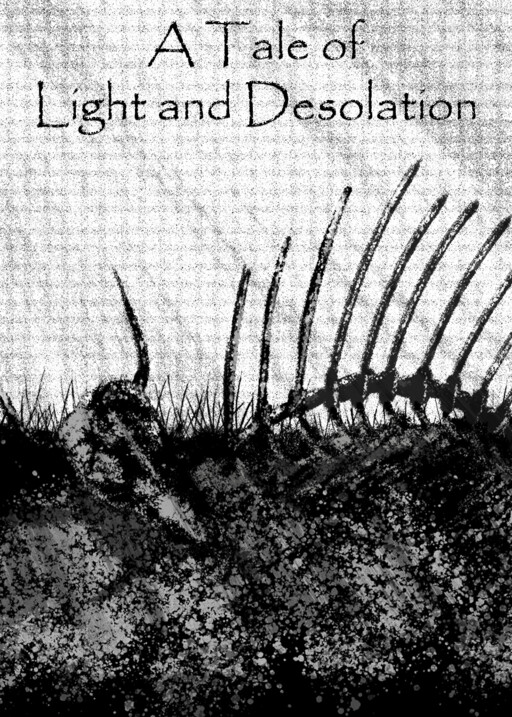
This world is not empty by chance. Something happened long before the story begins something no one fully remembers, something the land itself refuses to forget. The sun, once a source of life, has become a merciless force that erodes everything it touches. Shadows stretch thin, silence grows heavy, and the remnants of humanity cling to rituals older than memory. This series unfolds without dialogue, relying entirely on visual storytelling. Every frame is a fragment of a broken world; every detail hints at what was lost. The absence of words is intentional: it leaves space for unease, for interpretation, for the reader’s own fears to surface. "A Tale of Light and Desolation" blends horror, thriller, and mystery into a slow, atmospheric descent. It is not a story told through characters, but through landscapes, symbols, and the oppressive presence of a harsh sun. The style is both creative and refined, marked by a strong, deliberately unreal graphic identity. It blends abstraction with figuration, drawing influence from early 19th‑century Romanticism where nature and vast landscapes dominated the canvas and late 19th‑century Expressionism, which sought to externalize inner emotions and states of mind. From Brutalism comes a majestic, merciless influence, where structures impose themselves upon the viewer, pulling them into an unreal, hollow world.
